 Sigríður Björnsdóttir
Northern Lights Drive Iceland: Complete Guide to Finding Aurora by Car
Where to drive, when to go and how to read the aurora forecast. The essential guide for anyone who wants to see the Northern Lights by car in Iceland.
 Ólafur Magnússon10 min read
The northern lights can't be scheduled — but you can dramatically increase your chances. Here's the practical guide to aurora hunting in Iceland: forecasts, best locations, photography settings, and what to wear.
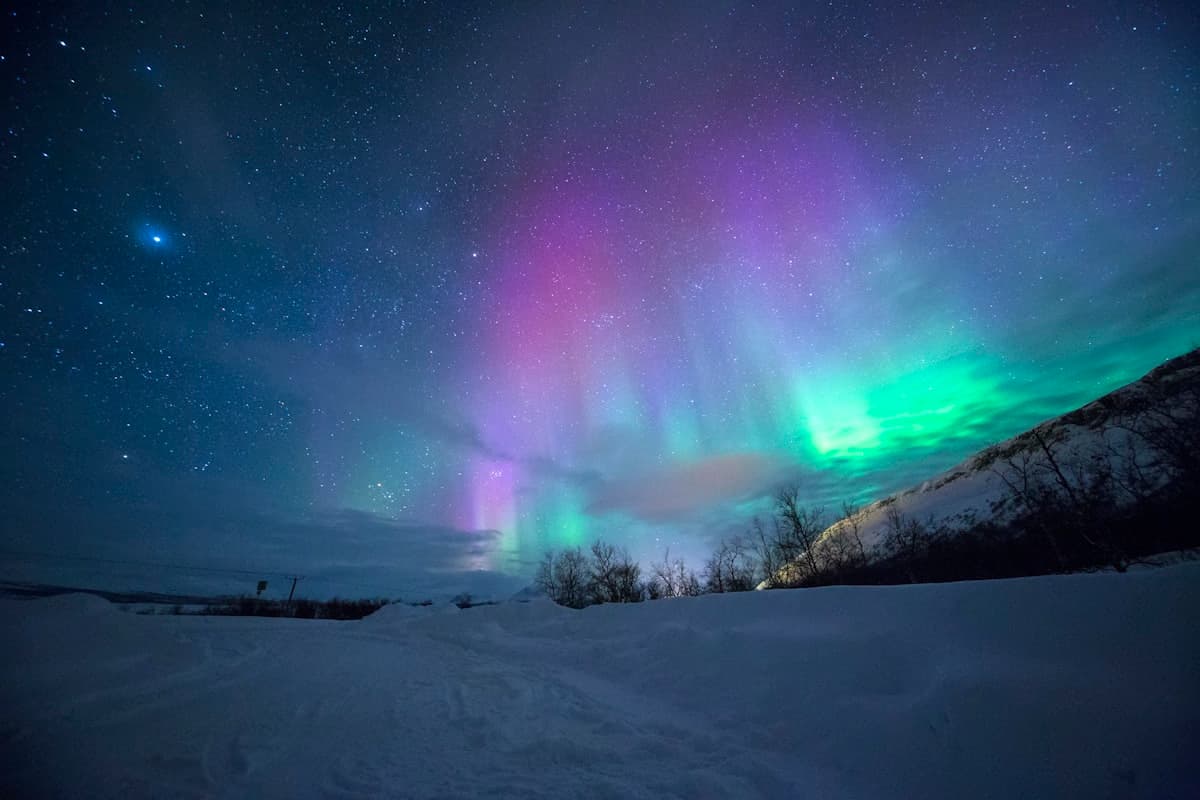
Iceland is one of the world's best destinations for aurora borealis viewing — positioned directly under the auroral oval, with dark winters, relatively accessible viewing sites, and an established infrastructure for aurora tourism. However, the northern lights cannot be scheduled. This guide covers the practical reality of aurora hunting in Iceland: what conditions you actually need, when to go, and how to maximize your chances in a country where cloud cover can ruin four consecutive nights and then deliver a spectacular show on your last evening.
Every aurora sighting requires three simultaneous conditions:
The optimal aurora viewing season in Iceland runs from September to March. This window provides:
The definitive source for Kp index forecasts from NOAA's Space Weather Prediction Center. Provides 3-day forecasts updated every 3 hours. For Iceland planning, look for nights with Kp 3+ predicted. Kp forecasts beyond 24 hours are approximate — treat them as guidance, not certainty.
Iceland's Meteorological Office publishes a combined aurora and cloud cover forecast specifically for Icelandic conditions. This is the most locally relevant tool — it overlays cloud forecast with aurora probability, showing you not just whether aurora is likely but whether it will actually be visible through the clouds at your location.
An excellent third-party site that combines NOAA data with user-friendly visualizations, including a real-time Kp gauge and 27-day solar rotation outlook.
Getting away from Reykjavík's light pollution dramatically improves aurora visibility. Within 30–60 minutes of the capital:
If you want to photograph the aurora, use these starting settings and adjust based on brightness:
Aurora viewing in Iceland winter means standing outside in sub-zero temperatures for potentially hours. Dress for the conditions:
Seeing the northern lights in Iceland is genuinely one of the most remarkable experiences available to any traveler. It requires flexibility — the willingness to stay up late, drive in the dark, and accept that weather might cancel the show on any given night. Build at least 4–5 nights into any winter Iceland trip to maximize your chances, monitor NOAA and vedur.is from the day before, and have a backup viewing location in mind in case cloud cover blocks your first choice. When the conditions align, no photograph does justice to the reality.
Where to drive, when to go and how to read the aurora forecast. The essential guide for anyone who wants to see the Northern Lights by car in Iceland.
Ólafur Magnússon10 min read
From 24-hour sunshine in summer to 3 hours of light in winter — how daylight affects driving in Iceland by season.
 Sigríður Björnsdóttir8 min read
Where to check forecasts, what the warnings mean, and what to do when roads close — a practical guide.
Sigríður Björnsdóttir7 min read