How to See the Northern Lights in Iceland: A Practical Guide

The northern lights can't be scheduled — but you can dramatically increase your chances. Here's the practical guide to aurora hunting in Iceland: forecasts, best locations, photography settings, and what to wear.

Sigríður BjörnsdóttirUppfært 8 mín lestímiWinter Driving

The Practical Guide to Seeing the Northern Lights in Iceland

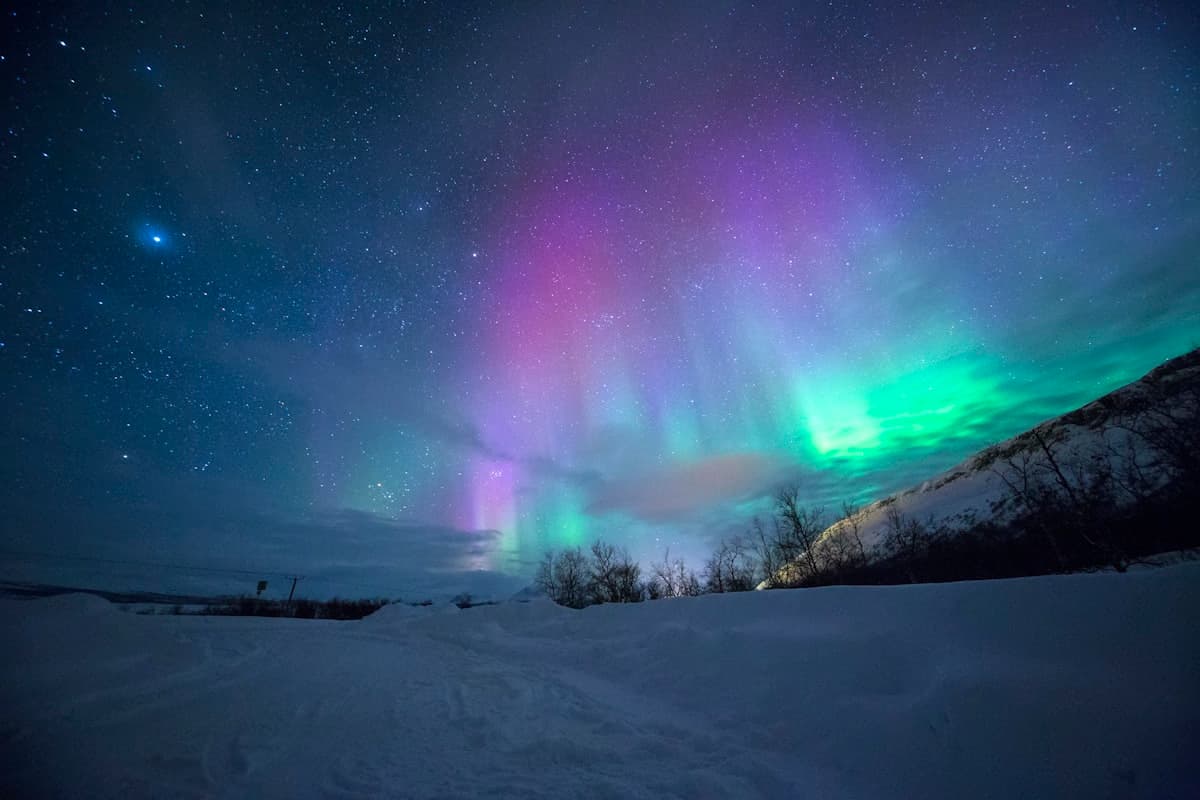
Iceland is one of the world's best destinations for aurora borealis viewing — positioned directly under the auroral oval, with dark winters, relatively accessible viewing sites, and an established infrastructure for aurora tourism. However, the northern lights cannot be scheduled. This guide covers the practical reality of aurora hunting in Iceland: what conditions you actually need, when to go, and how to maximize your chances in a country where cloud cover can ruin four consecutive nights and then deliver a spectacular show on your last evening.

The Three Conditions for Aurora Viewing

Every aurora sighting requires three simultaneous conditions:

  1. Solar activity (high Kp index): The Kp index measures geomagnetic storm intensity on a scale of 0 to 9. In Iceland, a Kp of 3+ makes aurora visible in rural areas; Kp 5+ produces spectacular full-sky displays visible even from bright city outskirts. Kp 7+ means aurora visible across the entire country including urban Reykjavík.
  2. Darkness: Aurora is present in the sky year-round, but only visible at night. Iceland has essentially no astronomical darkness between mid-May and late July — aurora hunting in those months is impossible regardless of solar activity.
  3. Clear skies: Cloud cover completely blocks aurora viewing. This is the variable that most frequently ruins aurora plans in Iceland — the country's sub-Arctic maritime climate means cloud cover is frequent and unpredictable.

Best Season: September to March

The optimal aurora viewing season in Iceland runs from September to March. This window provides:

  • Sufficient hours of darkness (6+ hours per night from October, 18+ hours per night in December)
  • Statistically higher solar activity (aurora activity follows roughly 11-year solar cycles — we are currently in Solar Cycle 25, which peaked around 2025 and is delivering some of the strongest aurora activity in two decades)
  • Better chance of clear skies in some years (September and March tend to have slightly better weather windows than January–February)

Checking Forecasts: The Tools That Actually Work

NOAA Kp Forecast (services.swpc.noaa.gov)

The definitive source for Kp index forecasts from NOAA's Space Weather Prediction Center. Provides 3-day forecasts updated every 3 hours. For Iceland planning, look for nights with Kp 3+ predicted. Kp forecasts beyond 24 hours are approximate — treat them as guidance, not certainty.

Vedur.is Aurora Forecast

Iceland's Meteorological Office publishes a combined aurora and cloud cover forecast specifically for Icelandic conditions. This is the most locally relevant tool — it overlays cloud forecast with aurora probability, showing you not just whether aurora is likely but whether it will actually be visible through the clouds at your location.

SpaceWeatherLive

An excellent third-party site that combines NOAA data with user-friendly visualizations, including a real-time Kp gauge and 27-day solar rotation outlook.

Best Viewing Locations Near Reykjavík

Getting away from Reykjavík's light pollution dramatically improves aurora visibility. Within 30–60 minutes of the capital:

  • Þingvellir National Park: Dark, flat horizon to the north and east, legally protected from light pollution. UNESCO World Heritage Site. 45 minutes from Reykjavík.
  • Grótta lighthouse (Seltjarnarnes): Surprisingly dark for its proximity to the capital — the ocean to the north provides a completely dark horizon.
  • Kleifarvatn lake (Reykjanes): Dark lake environment south of the city, excellent for photography with water reflections.
  • Öxará river in Þingvellir: Dark valley with mountain backdrop — one of Iceland's most photographed aurora locations.

Photography Settings for Aurora

If you want to photograph the aurora, use these starting settings and adjust based on brightness:

  • Aperture: As wide as your lens allows (f/1.8–f/2.8 ideal, f/4 workable)
  • ISO: Start at ISO 1600, increase to ISO 3200–6400 for faint aurora. Higher ISO = more noise.
  • Shutter speed: 5–15 seconds for stationary aurora; 2–4 seconds for fast-moving, active displays (longer exposures blur the movement)
  • Focus: Manual focus set to infinity. Autofocus fails in darkness.
  • Tripod: Essential. No handheld aurora photos are sharp.

What to Wear for Aurora Hunting

Aurora viewing in Iceland winter means standing outside in sub-zero temperatures for potentially hours. Dress for the conditions:

  • Thermal base layer (merino wool or synthetic, not cotton)
  • Insulating mid-layer (down or fleece)
  • Waterproof outer shell (Reykjavík-area weather can bring rain even in winter)
  • Insulated boots rated to -20°C or lower
  • Balaclava and neck gaiter — wind chill adds significantly to perceived cold
  • Hand warmers in gloves for extended photography sessions

Summary

Seeing the northern lights in Iceland is genuinely one of the most remarkable experiences available to any traveler. It requires flexibility — the willingness to stay up late, drive in the dark, and accept that weather might cancel the show on any given night. Build at least 4–5 nights into any winter Iceland trip to maximize your chances, monitor NOAA and vedur.is from the day before, and have a backup viewing location in mind in case cloud cover blocks your first choice. When the conditions align, no photograph does justice to the reality.

Tengdar greinar

Iceland's F-Roads: What You Must Know Before Driving the Highlands

Ólafur Magnússon9 min

Iceland Road Closures in Winter: How to Check and What to Do

Ólafur Magnússon6 min
Svart ís á Íslandi: Hvernig á að greina, forðast og komast af

Svart ís á Íslandi: Hvernig á að greina, forðast og komast af

Ólafur Magnússon6 min